Designing and Prototyping a Website for the Zoological Society of London’s Biobank
While studying abroad in London, I helped to develop a searchable web catalog for a wildlife biobank operated by the Zoological Society of London (ZSL). This page gives some background about the project and gives details about the website design process.
Background
What is ZSL?
The Zoological Society of London (ZSL) is a science-driven conservation charity dedicated to restoring wildlife, both in the UK and globally, through scientific research, field conservation, and public engagement. They are known for operating two zoos in the UK, the London Zoo and the Whipsnade Zoo. What they are less known for is their wildlife biobank, which is a large collection of biological specimens that are grouped into 4 categories: dry, frozen, wet, and slides. The dry and frozen collections where the focus of our research. The dry collection contains specimens like bones, skulls, pelts, and taxidermies, and the frozen collection contains preserved tissue samples.
What is an IQP?
At WPI, all students partake in three major projects throughout there academic journey. One is in the topic of Humanities (HUA), one in Social Science (IQP), and one in the topic of the student’s major (MQP). The Interactive Qualifying Project (IQP) is designed to give students an out-of-classroom experience that has real-world impact and is usually done in small teams of students with mixed majors. Most students choose to do their IQP at one of many project centers located around the globe where they volunteer for a local organization.
About the project
My project was to develop a searchable web catalog for the ZSL wildlife biobank so that users could browse the collections and make loan requests.
Instead of making assumptions about how the website would be used, my team worked closely with stakeholders and end-users to understand their needs. We spent several weeks administering a survey to prospective users and conducting follow-up interviews to learn more about what collections people would be interested, what they plan on using the specimens for (e.g., research, educational events, etc.), and what their experience has been like borrowing specimens from other biobanks.
Translating survey results into website design
The most interesting part of the project to me was figuring out how to design our website based on the results from our data collection. Below are a few examples of how we translated our findings into concrete design decisions.
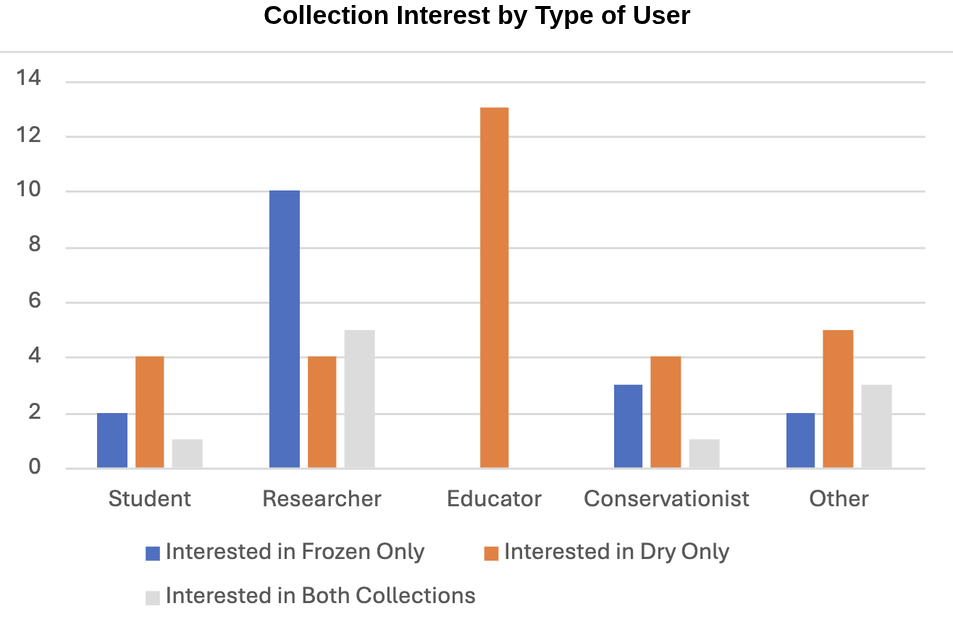
Our user survey revealed who might use the biobank website as well as their expected usage habits. We found that there were two primary groups of users, researchers and educators, and that researchers were more interested in the frozen collection, presumably due to their focus on DNA sampling, while educators were more interested in the dry collection, since they often wanted nice-looking items to display or use as props at their educational events (see figure below).
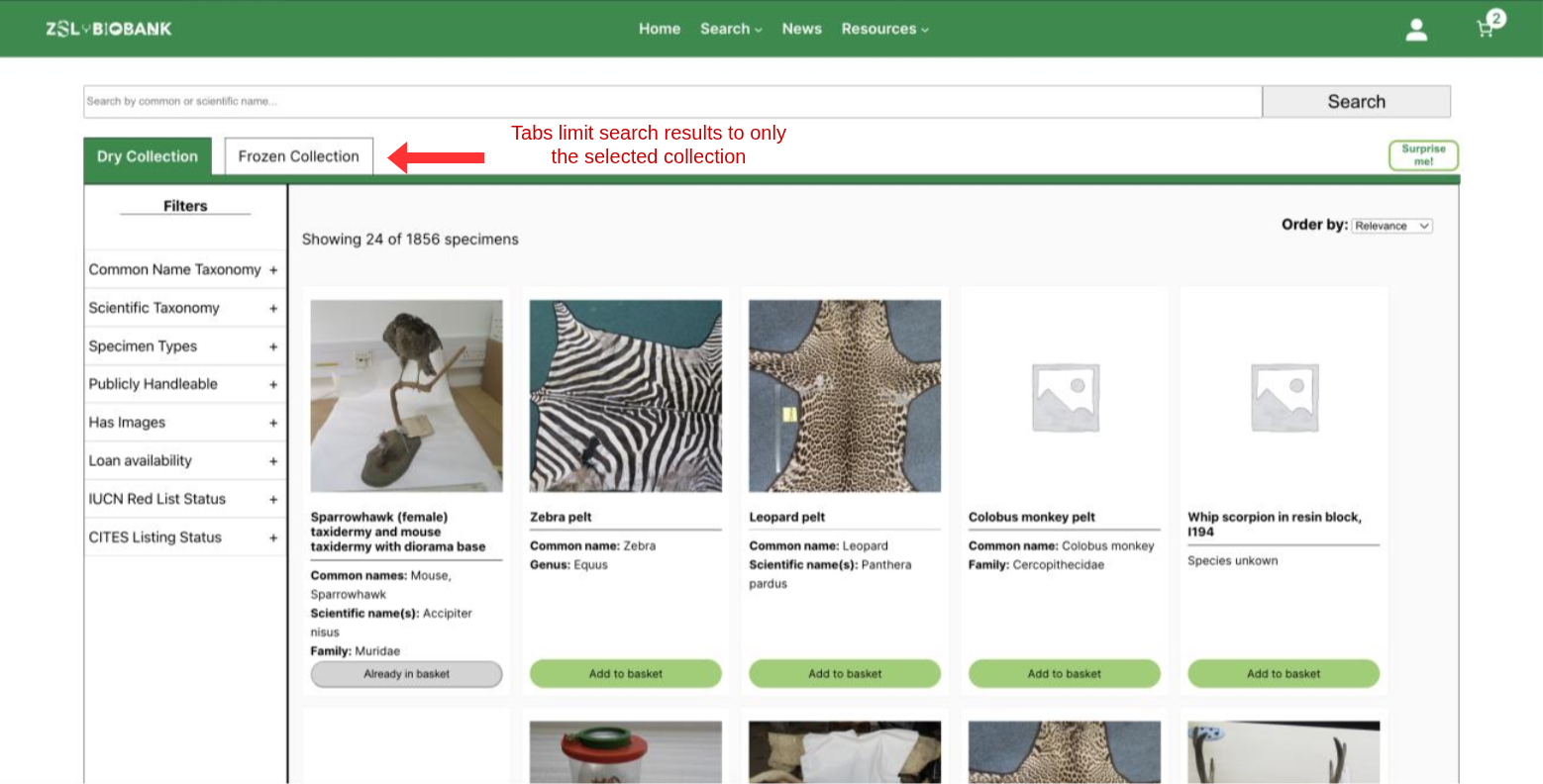
Since these two groups would only be interested in one of the collections at a time, it made sense to only allow users filter search results to just one of the collections. It is for this reason that there are tabs on the search page limiting search results to only the selected collection (see image below).
Another element of the search page that is influenced by findings is the ordering of search filters. The ordering mirrors how important each attribute is to the users, with the most important ones near the top.
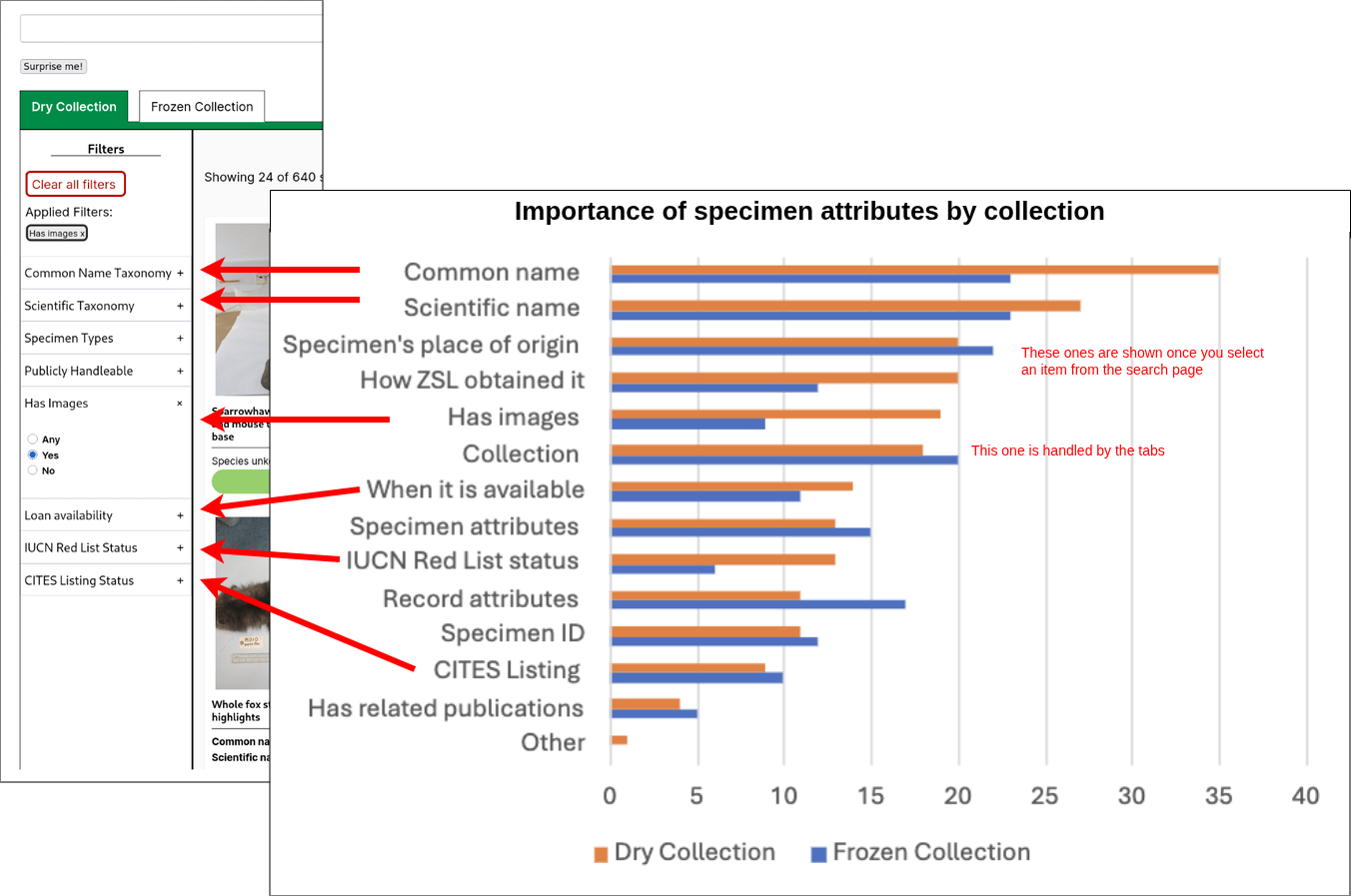
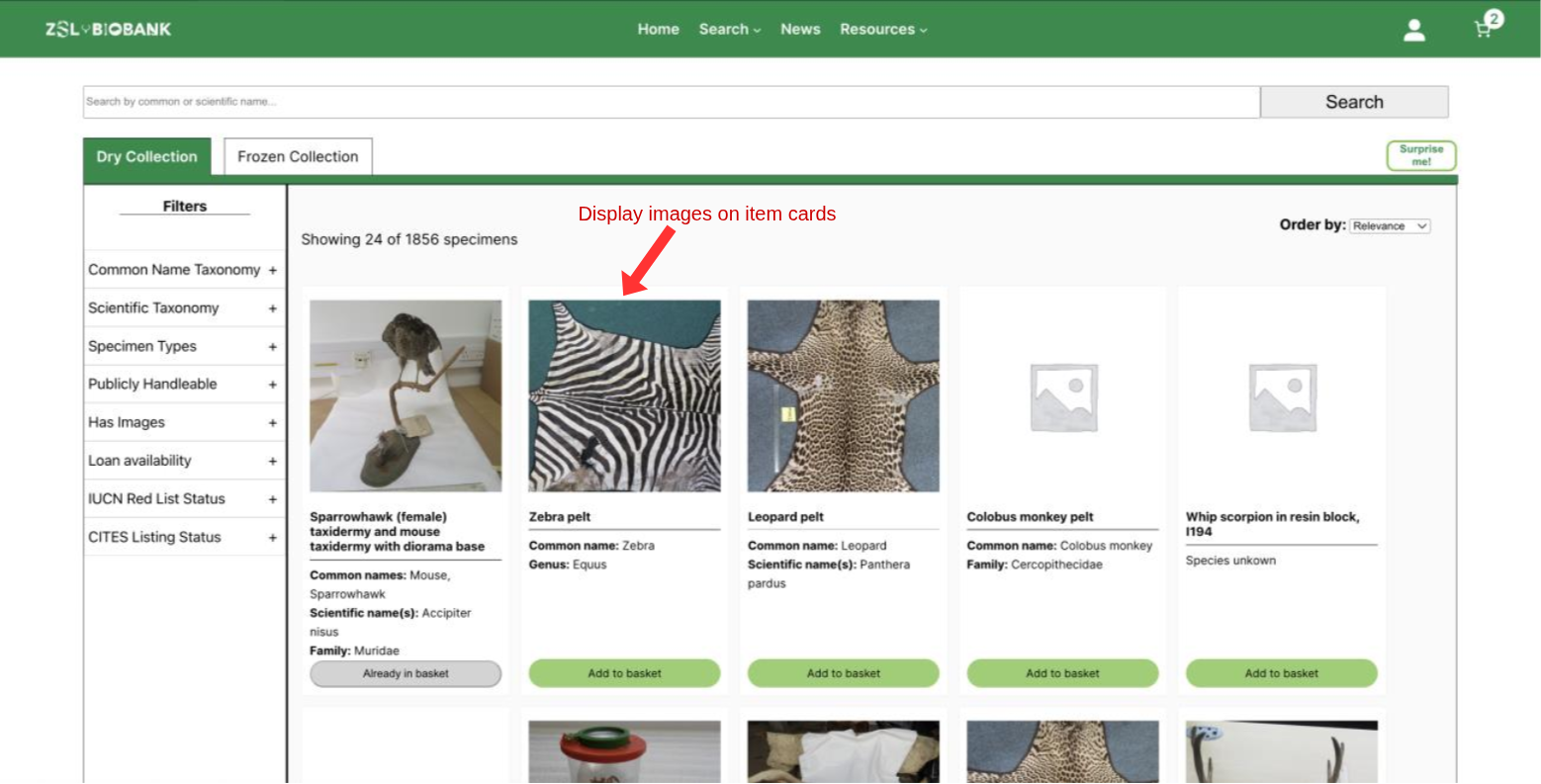
When it came to displaying search results, there are different ways we chose to display items in the dry collection vs the frozen collection. You may notice that in the bar chart above, for Has images, there is much higher interest with the dry collection than with the frozen collection (this makes sense since people who are interested in the dry collection often want specimens for visual/display purposes). For this reason, we chose to display specimens in a style that mimics an e-commerce shopping website with nice big images on each item listings.
For the frozen collection, we chose to use a different display style. Instead of item cards with big images, we chose to use a list format that displays more information about the specimen upfront. From a data perspective, this also makes more sense since the images for frozen collection specimen would all be just some generic test tube. Additionally, the frozen collection search results are grouped by specimen type since there can be multiple specimens of the same type. This makes the search results less overwhelming to navigate.
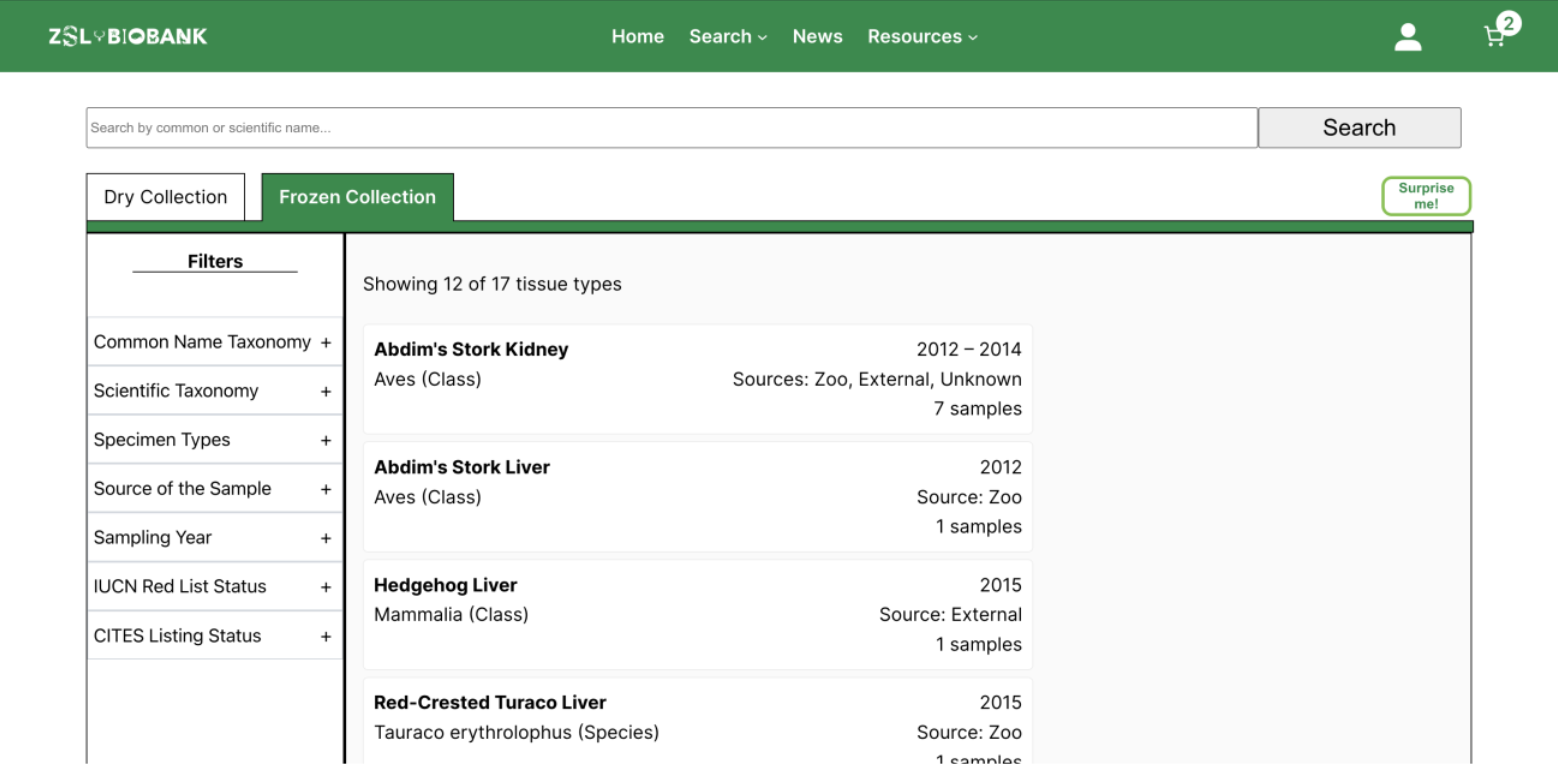
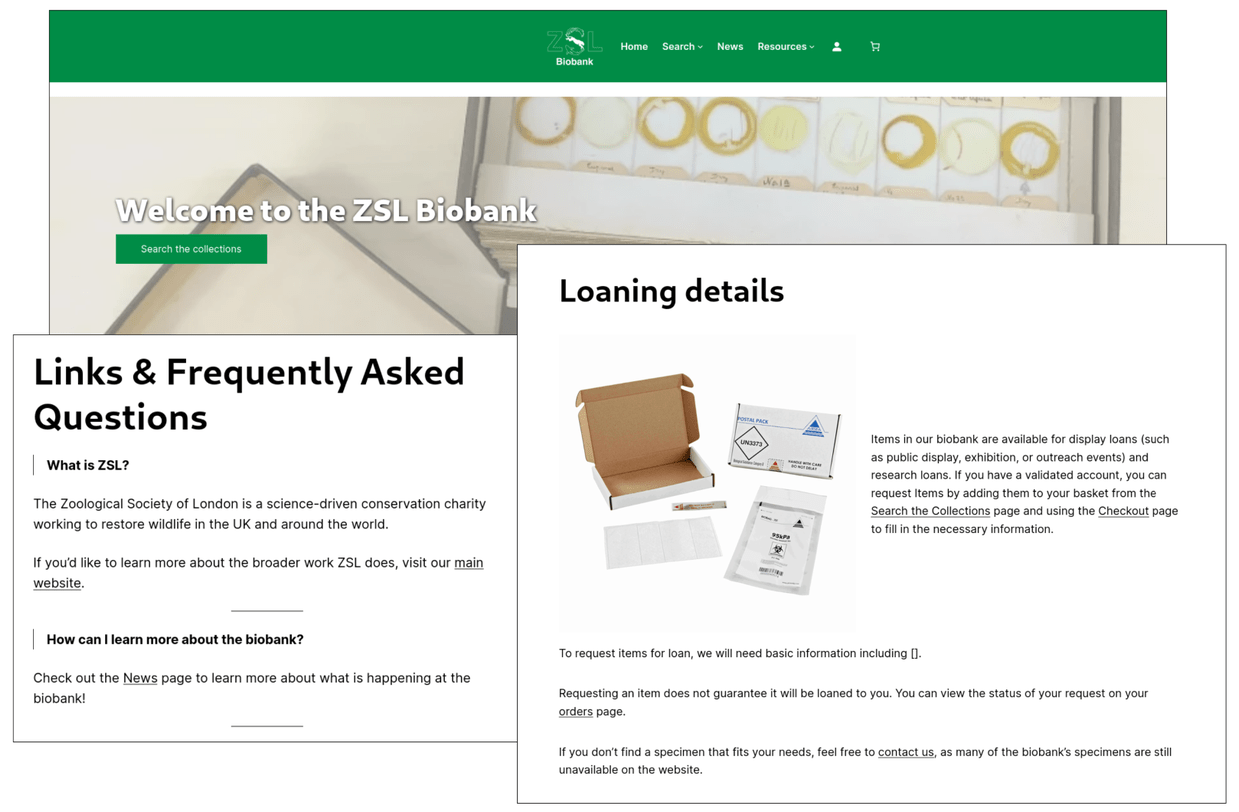
The search page was obviously a big focus for my team with this website, and it is where we incorporated most of our survey findings. Besides the search page, we have made a few other pages that are typically found on a website like this just to make it a complete package.
Takeaways
This project exposed me to the less technical side of software engineering, and the skills and methods I learned will definitely stick with me. I am grateful to have had the opportunity to work on this project, and I’m thankful to my advisors Dominic Golding and Laureen Elgert for there help throughout the project, and also to the ZSL biobank team for making me and my team feel welcome.